Sustainable Investment Disclosure
Marmara University recognizes sustainable development as an integral component of
its institutional development and considers both environmental and social
sustainability in the development of its physical infrastructure and campus-related
investments. Within the public-sector budgeting and financial management
framework applicable to Turkish public universities, the University directs resources
towards infrastructure and projects that contribute to renewable energy, energy and
resource efficiency, reduced environmental impacts, inclusive access to essential
services, and sustainable campus development.
Strategic Framework for Sustainable Investment
Marmara University’s 2026–2030 Strategic Plan, under Strategic Objective A3,
“Increasing Societal Contribution and Supporting Sustainable Development,”
establishes Target A3.H2: “Increasing the number of projects promoting
environmental sustainability by 100%.”
Within this framework, energy efficiency, zero-waste management, carbon footprint
reduction, environmentally friendly transportation, recycling, green space
management, and sustainable campus practices are identified among the areas to be
developed and expanded.
The Strategic Plan therefore provides an institutional framework for progressively
directing resources towards infrastructure and projects that support the University’s
sustainability objectives.
Investment in Renewable Energy Infrastructure
One of the most significant examples of Marmara University’s environmentally
sustainable infrastructure investment is the development of solar photovoltaic energy
generation infrastructure at the Recep Tayyip Erdoğan Campus.
According to the University’s institutional records and the relevant electricity
connection documentation, Marmara University Rectorate, Department of
Administrative and Financial Affairs, is identified as the electricity producer for the
facility. The documentation records a solar photovoltaic generation facility with a
generation capacity of 1,640 kWe and an installed capacity of 1,889.285 kWp.
This infrastructure constitutes a concrete example of institutional resources being
directed towards renewable energy generation and supports the University’s broader
environmental sustainability and sustainable campus objectives.
The underlying technical and administrative documentation relating to this renewable
energy infrastructure is maintained in Marmara University’s institutional records.
Investment in Inclusive and Accessible Healthcare Infrastructure
Marmara University also invests in physical infrastructure that contributes to the
social dimension of sustainable development, particularly by improving inclusive and
equitable access to essential services.
A significant example is the Barrier-Free Dental Hospital / Disabled Dentistry
Application and Research Center at the Recep Tayyip Erdoğan Campus, developed to
improve access to oral and dental healthcare services for persons with disabilities.
The University’s official institutional information on the project documents its
specific focus on the healthcare needs of persons with disabilities and the public
funding allocated to its development. The specialized healthcare infrastructure was
designed to address barriers that persons with disabilities may experience in accessing
appropriate oral and dental healthcare services.
The development of this facility represents a concrete investment in inclusive and
accessible healthcare infrastructure, supporting social inclusion and access to essential
health services.
Marmara University’s official website provides publicly accessible information on the
purpose and development of this investment.
Energy Performance and Sustainable Campus Infrastructure
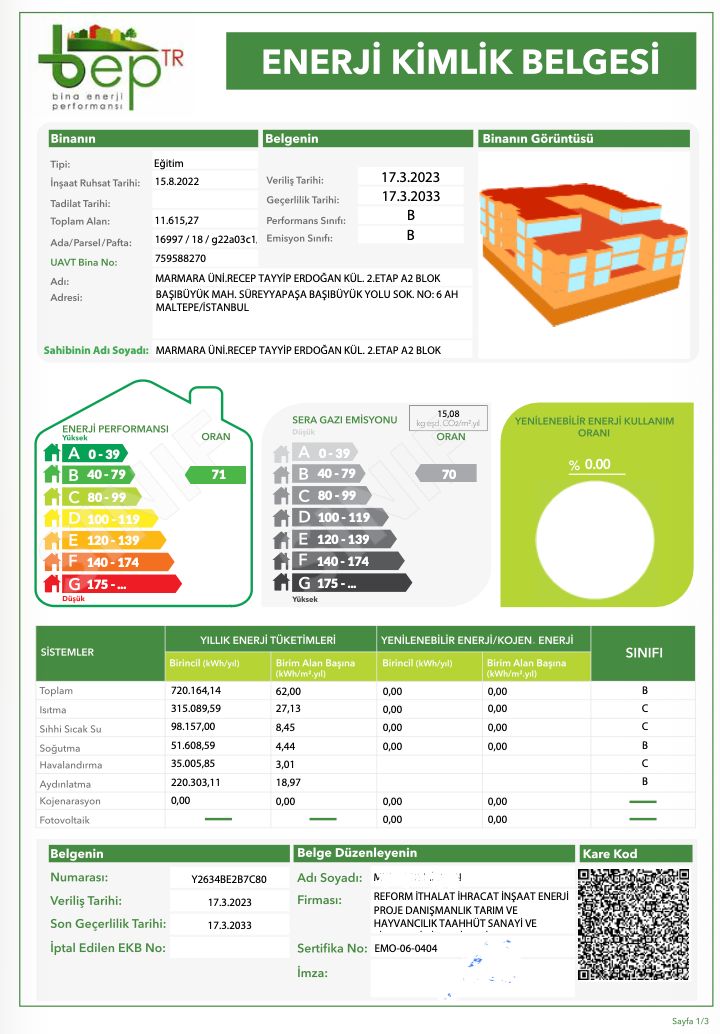
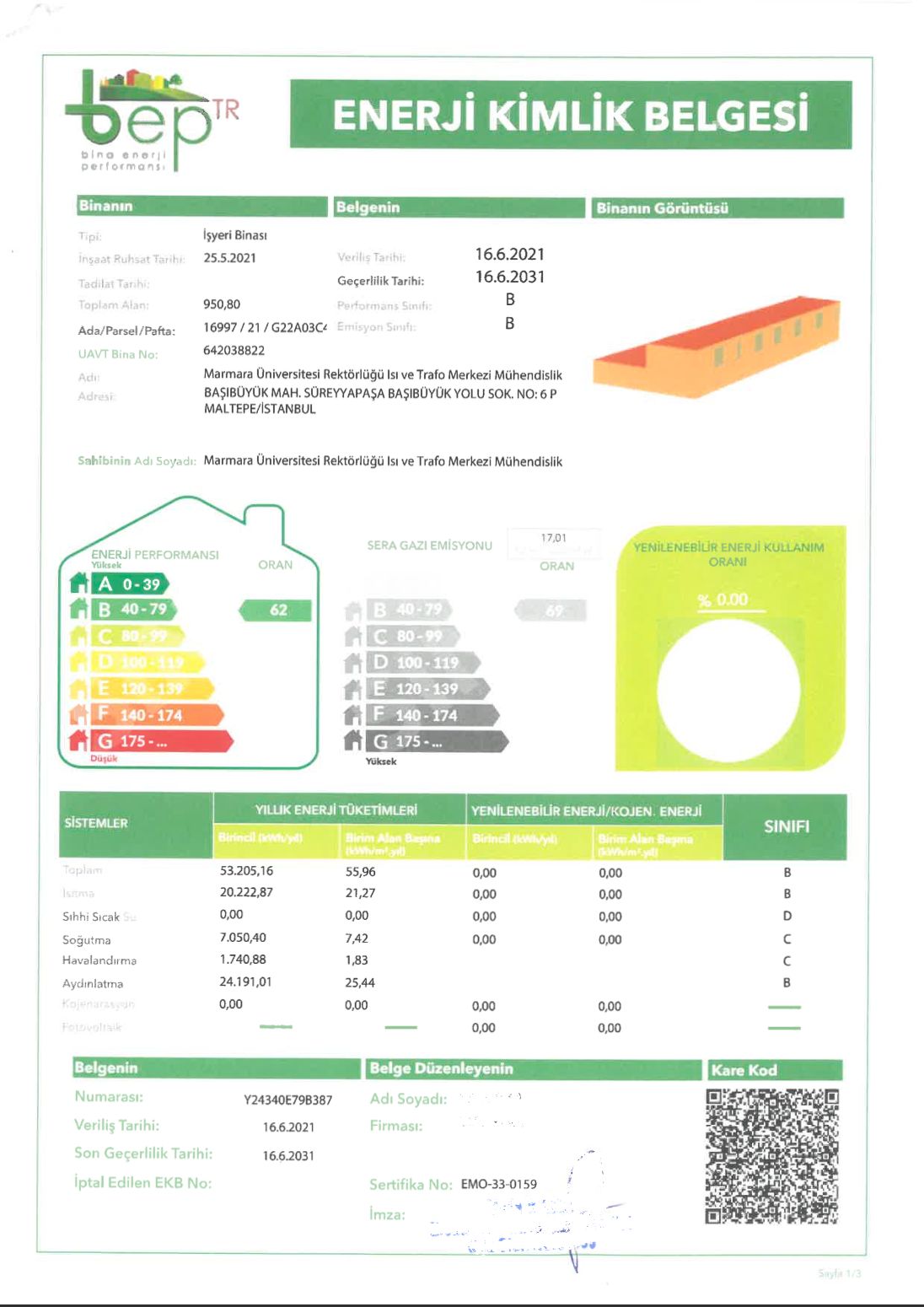
Marmara University also assesses and documents the energy performance of its
physical infrastructure through official Energy Performance Certificates (Enerji
Kimlik Belgeleri – EKB) issued for University buildings.
These certificates contain building-level information on energy performance, energy
consumption, greenhouse gas emissions, heating and cooling systems, lighting
systems, and other energy-related characteristics of University buildings. The
documentation also records energy-related building characteristics and systems,
including LED lighting in a number of buildings.
The Energy Performance Certificates are not presented as sustainable investments in
themselves. They constitute supporting evidence of the measurement and monitoring
framework through which Marmara University assesses the energy and environmental
performance of its physical assets and identifies areas relevant to energy efficiency
and sustainable infrastructure management.
The underlying Energy Performance Certificates are maintained in the University’s
institutional records.
Direction of Sustainable Investment
Building on its Strategic Plan and its documented investments in renewable energy
and inclusive infrastructure, Marmara University aims to progressively strengthen the
consideration of environmental and social sustainability in decisions concerning the
development and improvement of its physical assets and campus infrastructure.Within the public-sector budgeting and financial management framework applicable
to the University, areas relevant to this direction include renewable energy
infrastructure; energy and resource efficiency; reduction of greenhouse gas emissions
and other environmental impacts; sustainable and energy-efficient campus
infrastructure; waste reduction and circular use of resources; and inclusive and
accessible infrastructure supporting essential services.
This disclosure describes Marmara University’s strategic direction and documented
practices concerning sustainable infrastructure investment. It does not constitute a
separate financial investment policy or imply that the University operates an
unrestricted financial investment portfolio. Rather, it transparently sets out how
sustainability considerations are reflected in the allocation of resources to physical
infrastructure and campus development within the institutional and financial
framework applicable to Marmara University.
Institutional Basis and Supporting Information
Marmara University 2026–2030 Strategic Plan
Strategic Objective A3: Increasing Societal Contribution and Supporting Sustainable
Development
Target A3.H2: Increasing the number of projects promoting environmental
sustainability by 100%.
https://www.marmara.edu.tr/en/university/about/strategic-plan
Renewable Energy Infrastructure
Marmara University’s institutional records, including the relevant electricity
connection documentation, document the solar photovoltaic generation infrastructure
at the Recep Tayyip Erdoğan Campus and identify Marmara University as the
electricity producer. The documentation records a generation capacity of 1,640 kWe
and an installed capacity of 1,889.285 kWp. The original administrative and technical
documentation is retained in the University’s institutional records.
Inclusive and Accessible Healthcare Infrastructure
Marmara University’s official institutional records and publicly accessible
information document the development of specialized dental healthcare infrastructure
for persons with disabilities at the Recep Tayyip Erdoğan Campus.
https://www.marmara.edu.tr/en/news/barrier-free-dental-hospital
Building Energy Performance
Official Energy Performance Certificates maintained in Marmara University’s
institutional records document the energy and environmental performance of
University buildings, including energy consumption, greenhouse gas emissions,
building energy systems, and lighting characteristics.
Supporting administrative and technical documentation relating to the University’s
renewable energy infrastructure and building energy performance is maintained in
Marmara University’s institutional records.
This page updated by Sürdürülebilirlik Koordinatörlüğü on 17.09.2026 20:48:26


